
Cebria vs Prevagen

The bottom line
Cebria and Prevagen are dietary supplements, and the FDA does not approve dietary supplements for safety and effectiveness before they are sold. The FTC and New York State charged Prevagen's marketers with false and unsubstantiated memory claims, and a federal court ordered them to stop the deceptive claims. There isn't enough evidence to determine if ashwagandha, Cebria's key ingredient, helps cognitive function.
Key takeaways
- According to the federal complaint, Prevagen's marketers relied on a study that failed to show it works better than a placebo on any measure of cognitive function.
- Ashwagandha should be avoided during pregnancy and should not be used while breastfeeding. Although it is rare, cases link liver injury to ashwagandha supplements.
- Ashwagandha might interact with some medications, including those for diabetes and high blood pressure, sedatives, and thyroid hormone medications.
- Ashwagandha may be safe when taken in the short term, but there is not enough information to allow conclusions about its long-term safety.
- Don't use complementary health approaches as a reason to postpone seeing a health care provider about memory loss. Treatable conditions, such as depression or thyroid problems, can impair memory.
Memory loss can be a real issue that seriously interferes with the ordinary course of life. The aging process irreversibly slows the brain function down, resulting in gradual mental decline and forgetfulness. The symptoms can vary from minimal, such as forgetting where you left your car keys and what you were about to do to extremes, such as forgetting your address or even your name!
While cognitive decline is a natural, age-related process, much research has shown that it can be controlled or even boosted. Of course, we are not discussing prescribed medicine strictly controlled by a doctor but supplements that can positively support cognitive abilities. In case you’ve been struggling with memory loss, you must have been advised at some point to try taking over-the-counter memory boosters.
Suggestions might vary, from vitamins and over-the-counter drugs to prescribed medicine. Yet, dietary supplements that affect cognition and improve memory are among the most popular choices, and Cebria or Prevagen have been among the most recommended and positively reviewed. These two products have been touted to improve memory, boost thinking processes, and enhance overall brain health.
So, in this article, we will review Cebria vs Prevagen and provide you with important information about their effect, the benefits they deliver, and possible side effects.
Check what’s the best rated brain nootropic stack
Table of Contents
- What Kind of Supplements Are Cebria and Prevagen?
- Cebria – General Information
- Prevagen- General Information
- Cebria Vs. Prevagen – Similarities and Differences
- FAQ

What Kind of Supplements Are Cebria and Prevagen?
Cebria and Prevagen belong to the group of nootropics, i.e., dietary supplements that are deemed to improve the overall cognitive function, prevent memory loss, and boost creativity. Nootropics are not medicine, and they are generally taken by otherwise healthy individuals who feel that they need memory enhancers.
Nootropic supplements have become increasingly popular over recent years. Many of them are claimed to deliver multiple benefits and protect the mental health of users. However, their use and beneficial effect have still been a subject of ongoing research, and there’s still no definite consensus that confirms their efficiency.
Since they aren’t drugs, you can freely buy them from any store that sells dietary supplements. Cebria and Prevagen are produced in a controlled manufacturing environment. Both products are partially made from natural ingredients, and both are promoted with claims that they can enhance memory.
However, it is worth noting that the FDA hasn’t evaluated any nootropic supplements. Most of them are not used to treat, prevent or cure any age-related or brain-related disease. This refers to Cebria and Prevagen as well, so they are classified as supplements, and therefore can’t replace any treatment, nor can they substitute a healthy diet regime.
Cebria – General Information

How Does Cebria Help?
- Premium brain health supplment with natural memory formula
- Backed by science
- GMP
- Guaranteed satisfaction with 30-day unconditional satisfaction guarantee
Disclosure: This page contains affiliate links. If you buy through them we may earn a commission at no extra cost to you. As an Amazon Associate we earn from qualifying purchases. See our affiliate disclosure for details.
The manufacturer advertises Cebria as a memory fortifying supplement that helps aging individuals prevent memory loss and boosts concentration, focus, attention, and processing speed. It is claimed to show significant memory improvement in two months thanks to its proprietary formula. However, there isn't enough evidence to determine if ashwagandha, its key ingredient, is helpful for cognitive function.
What Ingredients Does Cebria Contain?
The key ingredient that the manufacturer takes pride in is ashwagandha extract, deriving from Ayurveda herb, found in India. Ashwagandha has been used for decades in Indian traditional medicine, and even centuries ago, it was known to support thinking processes and memory gain. In Cebria, the Aswagandha extract is highly concentrated without being diluted by any chemical solvent or alcohol, and this extract is known as KSM-66.
In addition to Ashwagandha extract, Cebria’s formula contains a blend of brain-stimulating ingredients. These ingredients include B vitamins (Folic Acid, B6, and B12) and green tea leaf extract. Short-term supplementation with these three B vitamins has not been shown to improve cognitive functioning in older adults, and taking too much vitamin B6 can cause serious side effects.
Besides the natural ingredients, the formula contains serine, aspartic acid, lactose, valine, tyrosine, histidine, isoleucine, threonine, arginine, leucine, lysine, glutamic acid, methionine, and tryptophan. This means that Cebria is not an all-natural product, despite the key ingredients being natural.
Safety and Side Effects
Cebria is a supplement produced in a controlled environment, following Good Manufacturing Practices (GMP) established by the FDA to ensure that the quality is sustained. Thera Botanics, the company that produces Cebria, claims that the amount of each ingredient is in line with the recommended daily intake. And even though it is not an all-natural product, the chemical ingredients used in the formula are of minimal quantity.
In some individuals, ashwagandha preparations may cause drowsiness, stomach upset, diarrhea, and vomiting, and although it is rare, there have been a number of cases that link liver injury to ashwagandha supplements. As with all other supplements, you need to make sure that you are not allergic to any of the ingredients used in the formula before you start using Cebria. Make sure that you don’t exceed the daily recommended dose of one capsule a day.
The Science Behind Cebria
All primary ingredients have been used in medicine for a long time. However, many of the studies of ashwagandha have had small sample sizes and have used a variety of ashwagandha preparations. The Ashwagandha extract has not only been used for centuries in traditional Indian medicine, but it has been a subject of clinical testing for 14 years.
Ixoreal Biomed, the company that has performed the study, was able to derive a concentrated extract from the roots of the Ashwagandha plant without using any solvents or alcohol. This pure extract was named KSM-66, and it is part of Cebria’s formula.
Unlike drugs, dietary supplements are not approved by the U.S. Food and Drug Administration (FDA) before they are sold to the public.
Prevagen- General Information
How Does Prevagen Help?
- Apoaequorin, the unique, high quality ingredient in Prevagen
- Does not require a prescription
- Easy to swallow
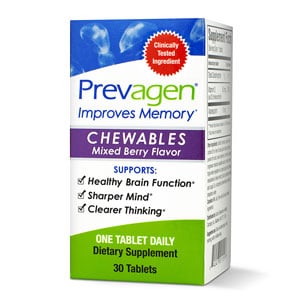
Quincy Bioscience, the maker of Prevagen, advertises the product as a memory stimulating supplement that can improve all aspects of cognitive function. Prevagen is claimed to promote a healthy brain and helps in reducing brain fog leading to sharper and faster thinking. According to Nielsen data, Prevagen is the number one America’s selling brain-stimulating supplement. In 2020, it received the “Best of Supplements Winner Award,” while it was voted ‘ The most recommended memory support brand‘ by pharmacists in a 2018-2019 survey conducted by Pharmacy Times.
What Ingredients Does Prevagen Contain?
Like Cebria, Prevagen also takes pride in offering a proprietary formula that helps tackle age-induced mild memory loss. The key ingredient used in the formula is apoaequorin, an ingredient found in glowing jellyfish in the 1960ies. The luminescent compounds of the jellyfish intrigued researchers. Apoaequorin is a protein that binds with calcium.
In addition to apoaequorin, Prevagen’s formula contains vitamin D, microcrystalline cellulose, maltodextrin, and vegetable capsule. With less than 2%, it also contains casein, peptones, magnesium stearate, lactose, soy peptones, salt, modified corn starch, and sugar.
Safety and Side Effect
The FDA does not have the authority to approve dietary supplements for safety and effectiveness before they are sold to the public. The safety claims for Prevagen have been made based on three studies of apoaequorin and Prevagen. They published their results claiming that no adverse effects have been observed when taking Prevagen for a longer time.
The company claims that over one million people have tried Prevagen with no side effects or contraindications. The recommended daily dose, though, is one capsule a day, with or without food.
The Science Behind Prevagen
Despite not being approved or evaluated by FDA, Prevagen has been part of a study to prove its efficacy in tackling age-related mild memory loss and cognitive performance.
A study on apoaequorin had led to the creation of a biotech company called Quincy Bioscience. It continued researching the potentials of apoaequorin to help older people improve their cognitive processes and quality of life. Therefore, Prevagen is initially based on long-term studies.
To further enhance the beneficial effect that Prevagen help on aging individuals, a double-blinded study was carried out in a clinical trial with healthy participants over 40 years old. There was also a controlled subgroup of participants that had mild age-related brain dysfunction. They were given one Prevagen per day in three months.
The clinical trial included a quantitative computerized cognitive assessment tool that performed various quantitative measures. Within those three months, they measured quantitive brain performance in five different intervals.
However, according to a complaint by the Federal Trade Commission and New York State, the marketers relied on a study that failed to show that Prevagen works better than a placebo on any measure of cognitive function. A federal court later ordered the makers to cease making the deceptive claims challenged in the lawsuit.
Cebria Vs. Prevagen – Similarities and Differences
When comparing Cebria Vs. Prevagen, it is clear that these two supplements have an identical purpose, i.e., to promote healthy brain performance but differ in their ingredient content. Both products boast high efficacy in improving brain health, memory, and overall wellness.
One striking difference, though, is their composition and vitamin complex included in their formula. Cebria is an herbal-based supplement and has a B vitamin complex, while Prevagen boasts a breakthrough formula with the key ingredient derived from a jellyfish. Since it is a rather new ingredient, it is natural to expect more studies that confirm its efficacy and make sure it is safe to use.
Regarding Cebria, the number of studies confirming its effect is relatively low. However, most of the ingredients in the formula have been widely used over the years, implying its safety and efficiency.
FAQ
Can Cebria and Prevagen Slow Down Age-Related Memory Loss?
There is no official FDA confirmation that nootropic supplements work on preventing or treating mental functions and brain health, and at this time, no vitamin or supplement is recommended for preventing Alzheimer's or cognitive decline.
Regarding Cebria, there isn't enough evidence to determine if ashwagandha is helpful for cognitive function, and short-term supplementation with vitamin B6, vitamin B12, and folic acid has not been shown to improve cognitive functioning in older adults.
Prevagen has been tested multiple times, and its effect has been measured to a certain degree. Thousands of users have reviewed it as helpful and very efficient. Yet, it is not FDA reviewed or approved, and it is not considered a drug that prevents or treats underlying aging issues.
Do Prevagen and Cebria Improve Brain Function or Maintain Brain Health?
There is no conclusive confirmation. A broad range of vitamins and supplements have not been tested for their effects on thinking, and their safety and effectiveness are largely unknown.
So far, it is officially known that no nootropic supplement has the power to prevent a brain-related disease. They are intended to maximize the cognitive potential and help maintain brain vitality. Don't use complementary health approaches as a reason to postpone seeing a health care provider about memory loss.
References
- Lopresti, Adrian L., Smith, Stephen J., Malvi, Hakeemudin., Kodgule, Rahul. Medicine (United States), 2019. An investigation into the stress-relieving and pharmacological actions of an ashwagandha (Withania somnifera) extract: A randomized, double-blind, placebo-controlled study. DOI10.1097/MD.0000000000017186.
- Salve, Jaysing., Pate, Sucheta., Debnath, Khokan., Langade, Deepak. Cureus, 2019. Adaptogenic and Immunomodulatory Activity of Ashwagandha Root Extract: An Experimental Study in an Equine Model. DOI. 10.7759/cureus.6466.
- Priyanka, G.Anil Kumar.B., Lakshman, M., Manvitha, V., Kala Kumar, B. Frontiers in Veterinary Science, 2020. Adaptogenic and Immunomodulatory Activity of Ashwagandha Root Extract: An Experimental Study in an Equine Model. DOI: 10.3389/fvets.2020.541112.
- Spence, Justin, Chintapenta, Monica, Kwon, Hyanggi Irene, Blaszczyk, Amie Taggart. Consultant Pharmacist, 2017. A brief review of three common supplements used in Alzheimer’s disease. DOI: 10.4140/TCP.n.2017.412.
- Bioscience, Quincy. Pharmacy Times, 2020. Pharmacists’ Guide to Recommending Prevagen®. ISSN 00030627.
- Onaolapo, Adejoke Yetunde, Obelawo, Adebimpe Yemisi, Onaolapo, Olakunle James. Current Aging Science, 2019. Brain Ageing, Cognition, and Diet: A Review of the Emerging Roles of Food-Based Nootropics in Mitigating Age-related Memory Decline. DOI: 10.2174/1874609812666190311160754.
- Vitthalrao, Leena Sakhare. Journal of Drug Delivery and Therapeutics, 2018. Nootropics Agents: Pharmaceutical Aspect, Common Examples, And Their Applications. DOI: 10.22270/jddt.v8i5-s.1940.
- Amyotrophic Lateral Sclerosis and Frontotemporal Degeneration, 2013. ALSUntangled No. 18: Apoaequorin (Prevagen). DOI: 10.3109/17482968.2012.727302.
- Morè, Lorenzo, Lauterborn, Julie C., Papaleo, Francesco, Brambilla, Riccardo. Neuroscience and Biobehavioral Reviews, 2020. Enhancing cognition through pharmacological and environmental interventions: Examples from preclinical models of neurodevelopmental disorders. DOI:10.1016/j.neubiorev.2019.02.003


