What is the Difference: Curcumin vs Turmeric?

Quick answer
Turmeric is a plant in the ginger family whose rhizome (underground stem) is used as a spice. Curcumin is a major component of turmeric and gives the spice its yellow color. We don't know enough to definitively conclude if turmeric or curcumin is beneficial for any health purposes.
This is general information, not medical advice. Ask your doctor or pharmacist about your own situation.
Key takeaways
- Highly bioavailable formulations of curcumin, which enhance the body's ability to absorb it, may harm your liver.
- The FDA has not approved curcumin as a treatment for cancer or any other medical condition.
- The use of turmeric supplements during pregnancy may be unsafe.
- If you take any type of medicine, talk with your health care provider before using any herbal product; some herbs and medicines interact in harmful ways.
- The amount of curcumin in each product labeled as curcumin can vary.
I will give you a detailed description of Curcumin vs. Turmeric to better understand the difference between them.
Turmeric is known as a Super Food because of its million-dollar health benefits. It is heavily produced and consumed in Asia, especially India.
Disclosure: This page contains affiliate links. If you buy through them we may earn a commission at no extra cost to you. As an Amazon Associate we earn from qualifying purchases. See our affiliate disclosure for details.
| VS | Health benefits | Best brand to buy |
|---|---|---|
| Turmeric | Helps protect brain cells & healthy Inflammatory response, Cardiovascular aid, Skincare (eczema) | Liquid Purathrive Turmeric |
| Curcumin | Supports Liver, Brain, Heart, and Immune Health, Protects Cells From Free Radical Damage | CuraMed Curcumin |
Scroll sideways to see every column.
What is Curcumin?

Curcumin is a component present in Turmeric. It is essentially a Curcuminoid. Three types of Curcuminoids are present in Turmeric.
- Curcuminoids are natural phenols present in Turmeric. Turmeric has a yellow color because of these Curcuminoids. The three Curcuminoids present in Turmeric are Curcumin Demethoxycurcumin, Dihydrocurcumin, and 5’- Methoxycurcumin.
- Curcumin Demethoxycurcumin, also known as Curcumin, is the phenol with the maximum health benefits out of the three.
- Phenols like Curcumin are seldom produced naturally by plants. These are responsible for protection against bacteria. Plants produce these phenols in response to environmental stress. This anti-bacterial property of curcumin makes them beneficial for health. Even so, the U.S. Food and Drug Administration (FDA) has not approved curcumin as a treatment for cancer or any other medical condition.
Curcumin is isolated from Turmeric and sold as a health supplement. It is the most bioactive component of Turmeric.
Curcumin shows poor solubility in water and fat. Combining curcumin with piperine from black pepper is one way to improve its bioavailability, but highly bioavailable formulations of curcumin may harm your liver.
What is Turmeric?
 Turmeric is the underground stem of the plant Curcuma Longa. It is known as a root but is a rhizome. Turmeric and Ginger belong to the same family.
People use Turmeric as a medicine and also as a taste enhancer in their food.
Southeast Asians use Turmeric extensively. History pages indicate that the usage of turmeric began some 4000 years.
Turmeric is used as an Ayurvedic and traditional medicine against skin problems as well. The yellow herb is also a principal spice in the curries made by traditional Indians and Chinese.
Like I have mentioned above, Curcumin is the major component of Turmeric. But, turmeric also has other phytonutrients. It consists of Vitamins and Minerals.
All the components of Turmeric synergistically make it beneficial for good health. It exhibits antibacterial, antifungal, antiviral, and antioxidant properties.
Now you know the fundamental difference between Curcumin and Turmeric. Let me take you through the essential health benefits of these two.
Health Benefits of Curcumin
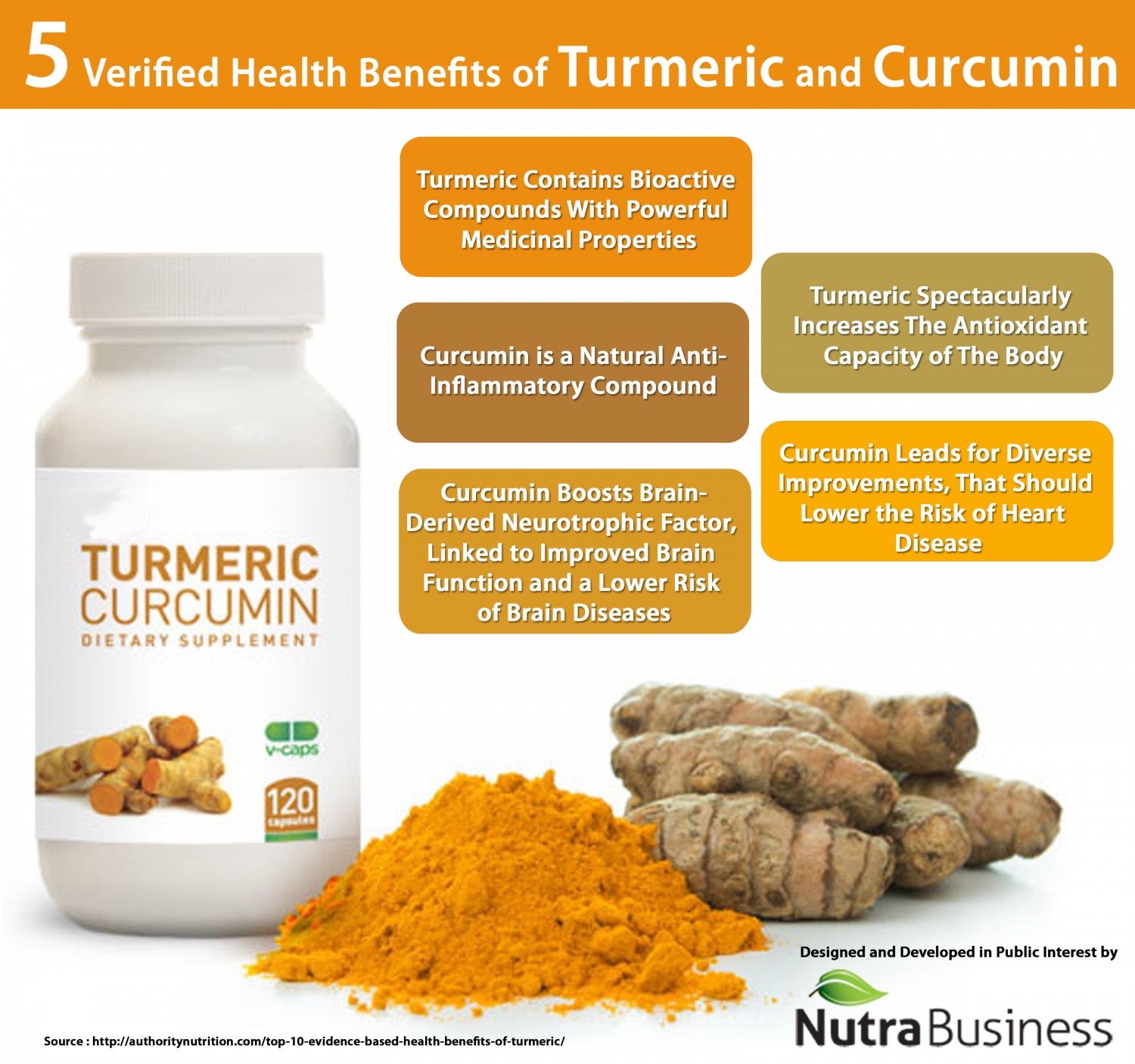
Curcumin is an isolated compound from Turmeric. It is available as a health supplement tablet or capsule and as a powder.
If you buy turmeric in powder form, you can use it in your food preparations regularly. Tablets and capsules are sold as dietary supplements, and unlike drugs, dietary supplements are not approved by the U.S. Food and Drug Administration (FDA) before they are sold to the public.
There is not enough evidence to know if curcumin products can prevent or treat cancer. Some people use it as a natural therapy for cancer, but some complementary and alternative therapies may be harmful when used with conventional treatment. Please consult an oncologist before taking any step.
Results of studies that used curcumin products with traditional cancer treatments have been mixed. It also acts as an antioxidant and anti-inflammatory agent.
The free radicals in the body hamper DNA transcription. There isn't enough evidence to definitively conclude whether curcumin has beneficial effects on infections.
Curcumin is also promoted for osteoarthritis. The initial evidence for relieving knee pain and stiffness is positive, but higher-quality evidence is needed to reach definitive conclusions.
Curcumin is also promoted for the uses listed below, but there isn't enough evidence to definitively conclude whether it has beneficial effects on them:
- To treat Dyspepsia or upset stomach
- To regulate blood glucose level
- To treat lousy cholesterol or LDL in the blood
- Increases insulin sensitivity
- Treating the pain and soreness related to arthritis
- Promoting neurological health and function
- It helps in losing weight
Health Benefits of Turmeric
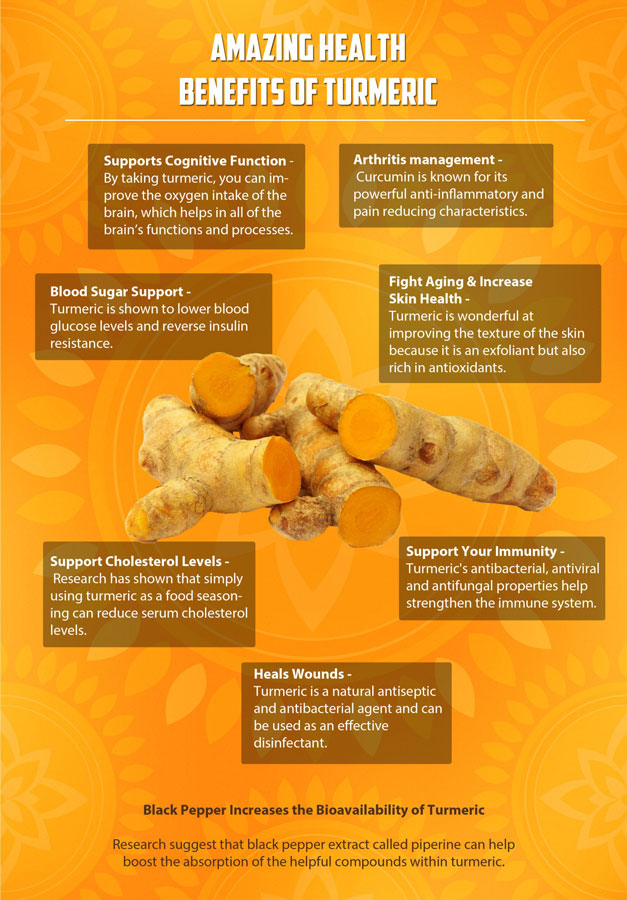
Today, turmeric is promoted as a dietary supplement for a variety of conditions. I try to include turmeric in my daily diet. You can use Turmeric in different ways. It is available in the form of roots, dried powder, and capsules.
Turmeric has been used in traditional medicine for arthritis. There isn't enough evidence to definitively conclude whether it has beneficial effects on Rheumatoid Arthritis or Osteoporosis.
Turmeric has been used in traditional medicine for skin infections, and some people use it for Acne, dull skin, dark circles, and more. Keep in mind that topical curcumin can cause hives or itching.
Additional to the above benefits, many studies have looked at turmeric or curcumin for high cholesterol, but we don't know enough to definitively conclude if it is beneficial. Turmeric is also promoted or traditionally used for the conditions listed below, without enough evidence to definitively conclude that it helps:
- Cardiovascular diseases
- Neurological disorders
- Diabetes
- Autoimmune diseases
- Indigestion and abdominal pain
- Liver and Gallbladder dysfunctions
- Cold and flu
- Depression
- Alzheimer's disease
- Infections and wounds
- Weight loss
For more details, you can also read 15 Health Benefits of Turmeric.
If you are specifically looking for weight loss benefits from Turmeric and Curcumin, I will compare the two below:
Curcumin vs. Turmeric for Weight Loss
Turmeric root contains 2-5% of Curcumin. There isn't enough evidence to definitively conclude whether Turmeric or Curcumin has beneficial effects on weight loss.
The health activities of turmeric are commonly attributed to curcuminoids, which include curcumin. Highly bioavailable formulations of curcumin, which enhance the body's ability to absorb the curcumin, may harm your liver.
Scientists have studied and researched the effect of Turmeric and Curcumin on weight loss.
Turmeric and Curcumin are also associated with lowering LDL. LDL stands for low-density lipoprotein, and it is sometimes called bad cholesterol.
Many studies have been conducted on turmeric or curcumin for high cholesterol, but we don't know enough to definitively conclude if either is beneficial.
There isn't enough evidence to definitively conclude whether turmeric or curcumin has beneficial effects on blood sugar or diabetes. It's very important not to replace medical treatment for diabetes with an unproven health product or practice.
Many people choose to follow the Turmeric diet for weight loss. I also prefer the Turmeric diet, not Curcumin. But, you can give it a try as Curcumin is cheaper than Turmeric supplements.
The dosage of Turmeric and Curcumin differ a lot. Curcumin is less soluble than Turmeric. Are you thinking you require less Curcumin for weight loss than Turmeric?
You are correct in a way. The recommended dose for Turmeric to lose weight is 1 to 3 grams. Whereas for Curcumin, the recommended dose is 80 to 400 mg.
But, it would help if you combined black pepper with Curcumin to increase its solubility. However, liver damage has been reported in some people who have consumed curcumin products with increased bioavailability.
If you're thinking about starting a new weight-loss program, talk with your health care provider first. You can make a habit of adding curcumin powder along with black pepper in your stir-fries and soups daily.
Before you go ahead and order Curcumin supplements or powder, go through the side effects of Turmeric and Curcumin. It will help you decide better and be cautious.
Side Effects of Curcumin
Few side effects have been reported from the use of products with curcumin, and the most common complaint is digestive problems. But if you notice any liver damage symptoms such as fatigue, nausea, poor appetite, dark urine, or jaundice, stop consuming turmeric or curcumin products immediately and talk with your health care provider. Some of you might suffer from minor or significant drug reactions. Some of the adverse or side effects of Curcumin that you may notice are listed below:
- Bloating
- Diarrhea
- Upset Stomach
- Gastritis
If you are suffering from a severe medical condition, consult your doctor before having Curcumin.
People with heart disease, diabetes type 2, or any other disease should always consult their physician before trying Curcumin.
Side Effects of Turmeric
Conventionally formulated oral turmeric is likely safe in the recommended amounts for up to 2 or 3 months. Many people take about 1 -2 grams of Turmeric powder daily in their diet. However, oral turmeric can cause adverse effects such as nausea and vomiting, acid reflux, stomach upset, diarrhea, or constipation, and the use of turmeric supplements during pregnancy may be unsafe.
If your body is allergic to Turmeric, you will notice the below things:
- Heart Burn
- Nausea
- Dizziness
- Topical application causing skin irritation
It is always good to start with minimal doses of Turmeric or Curcumin. You never know what reacts with your body adversely.[/thrive_text_block]
I hope this article interests you and helps you maintain a healthy and better lifestyle. If you like my writing, do not forget to share it with your friends.
You can share your thoughts or queries in the comments below. I will be happy to respond.