
Focus Factor vs Prevagen

The bottom line
The FTC and New York State charged Prevagen's marketers with false and unsubstantiated memory claims, and a federal court ordered them to stop the deceptive claims. Marketers of Focus Factor once settled FTC charges over unsubstantiated advertising claims. The FDA does not approve dietary supplements for safety and effectiveness before they are sold.
Key takeaways
- According to the federal complaint, Prevagen's marketers relied on a study that failed to show it works better than a placebo on any measure of thinking.
- Focus Factor lists ginkgo, which has not been shown to be beneficial for preventing or slowing the progression of dementia.
- Ginkgo may increase the risk of bleeding in people taking anticoagulant drugs such as warfarin, and it may be unsafe during pregnancy.
- Memory loss can come from treatable problems such as depression, bad reactions to medicines, or thyroid, liver or kidney problems. See a health care provider about it.
- If you have a bad reaction, stop the supplement, seek medical care or advice, and report it to the FDA.
In this fast-growing world, cognitive health is becoming the main concern of many students, professionals, and even business owners. But what if you end up with a bad pick?
Many nootropic supplements claim to help you improve cognitive health, but their ingredients define them as multi-vitamin.
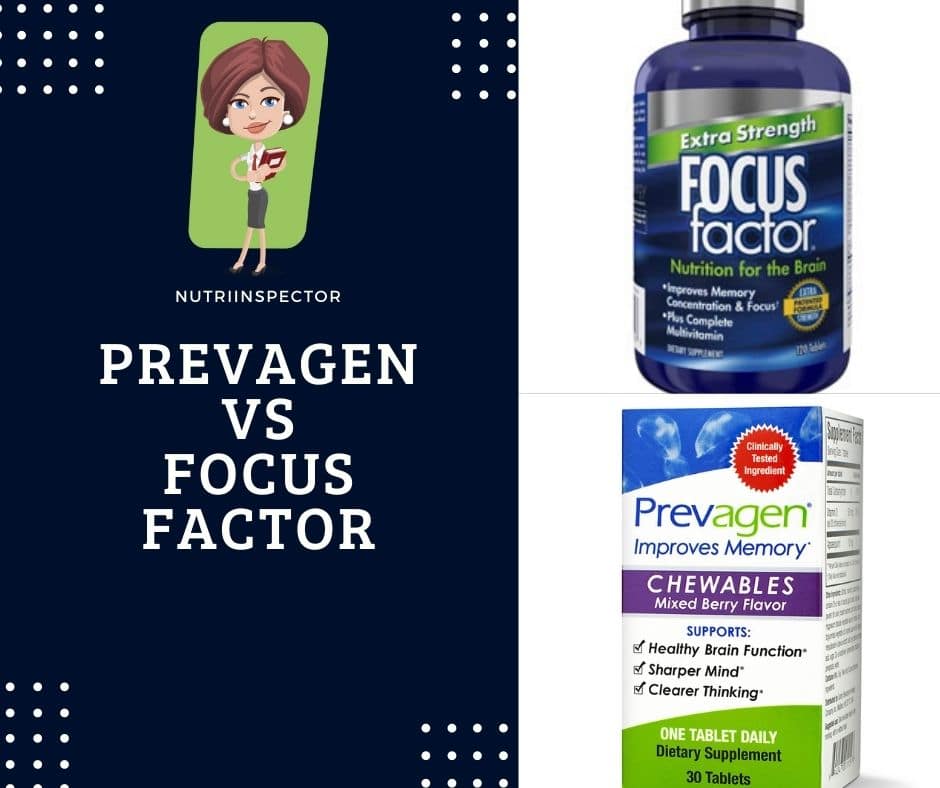
Focus Factor and Prevagen are two famous nootropic supplements. But both aren’t the same and don’t work for everyone. So, based on our extensive research, here is a guide on Focus Factor vs Prevagen. We will also describe their cognitive functions and how they help improve memory and brain function.
Check what’s the best rated brain nootropic stack
Table of Contents
- Focus Factor vs Prevagen – Overview
- Prevagen vs Focus Factor – Ingredients
- How Do They Work?
- Focus Factor and Prevagen – Dosages & Servings
- Prevagen and Focus Factor – Side Effects
- Focus Factor vs Prevagen – Pricing & Value
- Final Thoughts on Prevagen vs Focus Factor Comparison
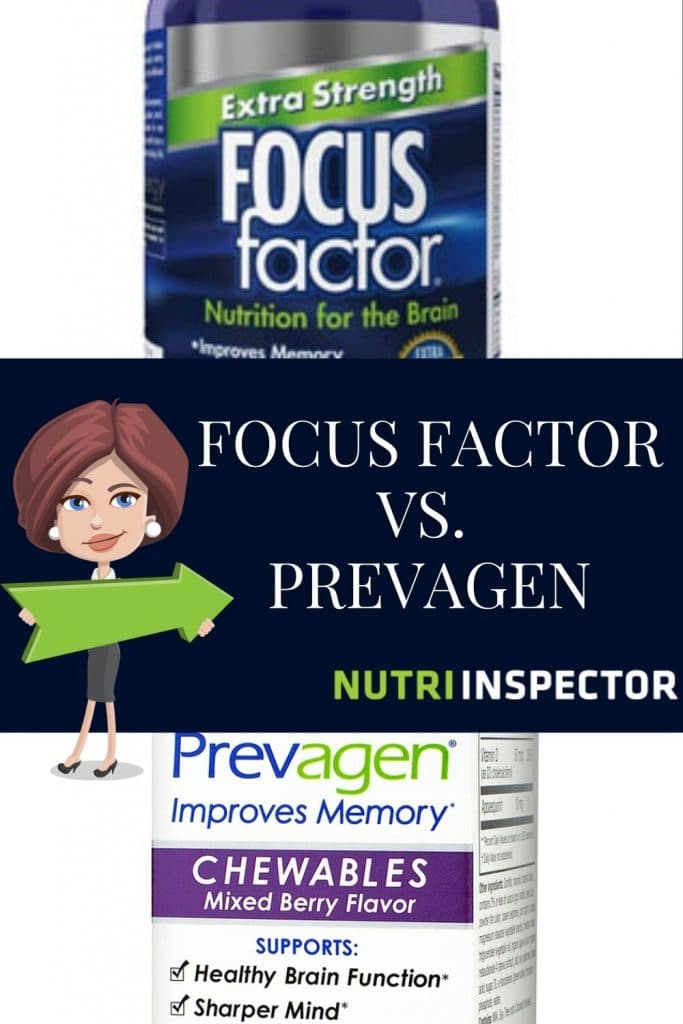
Focus Factor vs Prevagen – Overview
Focus Factor and Prevagen are nootropic supplements formulated to improve the memory and cognitive function of the human brain. These supplements are based on ingredients with significant positive effects on brain health.[1]
Similarly, Focus Factor is manufactured using specific nootropic ingredients to improve memory, cognition, concentration, and focus. As a nootropic supplement, it contains multiple ingredients to target multiple cognitive pathways in the human brain.
On the other side, Prevagen targets clarity and memory. It is manufactured by Quincy Bioscience, a company that a federal court ordered to stop making deceptive claims about Prevagen. Prevagen contains TWO functional ingredients targeting specific pathways to improve mental health.
Both of these supplements have different ingredients that work on different pathways, making them unique to the other.
Prevagen vs Focus Factor – Ingredients
The overall functionality of a nootropic supplement depends on the ingredients used in its formulation. Generally, nootropics contain vitamins and minerals, herbal nootropics, and proteins for boosting energy, concentration, focus, mood, and support related cognitive functions.
The selection of ingredients in a supplement defines whether it is an effective nootropic or just a simple dietary supplement.
Ingredients in Focus Factor:

Focus Factor is formulated by a blend of the following ingredients.
- Vitamin A
- Vitamin C
- Vitamin E
- Vitamin D
- Vitamin B1 (Thiamine)
- Vitamin B2 (Riboflavin)
- Vitamin B3 (Niacin)
- Vitamin B6
- Folate
- Vitamin B12
- Pantothenic Acid
- Biotin
- Choline
- Calcium
- Iron
- Iodine
- Magnesium
- Zinc
- Selenium
- Copper
- Manganese
- Chromium
- Molybdenum
- Potassium
- Dimethylaminoethanol
- Ginkgo Biloba Leaf Extract
- Bacopa Monnieri Extract
- L-pyroglutamic acid
- Phosphatidylserine
- Docosahexaenoic acid concentrate
- Inositol,
- N-acetyl tyrosine,
- Bilberry Fruit Standardized Extract
- Gamma-aminobutyric acid
- Grape skin and grape seed extracts
- Trace-Lyte electrolyte concentrate
- Huperzine A
- Boron
- Vanadium
Disclosure: This page contains affiliate links. If you buy through them we may earn a commission at no extra cost to you. As an Amazon Associate we earn from qualifying purchases. See our affiliate disclosure for details.
This long list of vitamins, minerals, and proteins gives a mind-blowing impact. However, if you are picking it because of the list, think again.
No matter how many vitamins and minerals a nootropic supplement contains, its functionality depends on the ingredients with cognitive functionality.
In this regard, Vitamin B6 and B12 are of great importance. In recent research, B vitamins, especially Vitamin B6 and B12, have cognitive properties. [2] Moreover, many nootropic stacks, such as Mind Lab Pro, Qualia Mind, and Brain Pill, contain a significant amount of these vitamins.
Similarly, there are multiple minerals blended into Find Focus. Minerals play an important role in improving cognitive abilities, as mentioned in many studies where a blend of multiple minerals is supposed to manifest, improve and regulate the cognitive health of the human brain.[3]
In addition to this eye-catching list of minerals and vitamins, Focus Factor contains Bacopa Monnieri extract and Ginkgo Biloba Leaf Extract. These are well-known herbal supplements, but it's uncertain whether supplements containing ginkgo actually influence cognitive performance in healthy people, and ginkgo has not been shown to be beneficial for preventing or slowing the progression of dementia. [4]
The other ingredients promoted as cognitive enhancers are N-acetyl tyrosine, Huperzine A, Bilberry Fruit Standardized Extract, and Phosphatidylserine.
Ingredients in Prevagen:
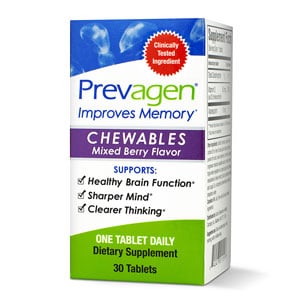
Prevagen contains a very compact list of ingredients.
- Vitamin D (as D3 – cholecalciferol)
- Apoaequorin
A short list of ingredients.
Unlike Focus Factor, Prevagen has a very compact list of ingredients – only TWO, a big difference between Prevagen and focus factor.
Apoaequorin, the main ingredient of Prevagen, is a famous calcium-binding protein used as a dietary supplement to improve cognition, learning, and memory. However, according to a federal complaint, Prevagen's marketers relied on a study that failed to show that Prevagen works better than a placebo on any measure of cognitive function. [5]
The other main ingredient of Prevagen, Vitamin D – which regulates neurotransmitters in the brain, is supposed to improve cognition. In recent research, it is found that the deficiency of vitamin D is associated with mental health. A lower intake of vitamin D can increase the risk of cognitive decline and poor mental health. [6]
The Federal Trade Commission and New York State Attorney General charged the marketers of Prevagen with making false and unsubstantiated claims that the product improves memory, and after a jury trial a federal court ordered them to stop making the deceptive claims challenged in the lawsuit. But, based on the efficiency, effectiveness, and dose, our vote is with Focus Factor. Bear in mind that in 2004, marketers of Focus Factor (Vital Basics, Inc. and Creative Health Institute, Inc.) agreed to settle Federal Trade Commission charges that they made unsubstantiated advertising claims for the product.
How Do They Work?
On ingestion, nootropics work on the specified pathways related to brain health. Some ingredients work as anti-oxidants, some improve mood, and some work as dopaminergic or anti-depressants.
Let’s have a look at how does Prevagen and Focus Factor works.
How Focus Factor Works?
Focus Factor contains multiple ingredients, including vitamins, minerals, dopaminergic, herbal brain supplements, and neuroprotective nutrients. Once ingested, these nutrients head towards their specified pathways which relate to brain health.
For example, improving blood flow in the brain cells, scavenging free radicals as anti-oxidant, and maintaining proper functions.
In comparison to Prevagen, Focus Factor can target various reactions at once. Thus, making it more versatile and competitive to improve cognition.
How Prevagen Works?
In comparison to Focus Factor, Prevagen contains only two functional ingredients – Apoaequorin and Vitamin D. Both of these ingredients target neurotransmitter functionality and other pathways related to memory and focus.
Focus Factor and Prevagen – Dosages & Servings
Since the formulation of both Prevagen and Focus Factor’s is based on unique ingredients, they come with different serving sizes and doses.
Focus Factor Dosage
For Focus Factor, the suggested serving size is four tablets per day, suggested to be taken with food. The maximum serving size is eight tablets per day. You are free to decide whether to take four tablets all together or divide them into doses. However, the thing to be noted here is the concentration of Huperzine A. Some sensitive people have reported headaches on long-term intake of Huperzine A.
It makes the long-term use of Focus Factor questionable. However, we suggest consulting with your doctor in concerns related to medical complexities.
Prevagen Dosage
For Prevagen, the suggested dosage is one tablet per day, which is suitable for many people. It contains a significant amount of apoaequorin, which is 10mg per capsule. However, research hasn’t come to a point regarding the effectiveness of apoaequorin as a cognitive enhancer. Further research about its effects is important.
Prevagen and Focus Factor – Side Effects
Prevagen and Focus Factor, both supplements are supposed to have some side effects. But effective clinical trials and research can clarify the doubts. Here is what we found.
Focus Factor Side Effects
Focus Factor formulation is mainly based on herbal nootropics, but do not assume that a product described as natural is safe. Ginkgo may increase the risk of bleeding in people who are taking anticoagulant drugs, such as warfarin, and may be unsafe for use during pregnancy. For most adults, ginkgo leaf extracts are likely to be safe when taken orally in moderate amounts.
However, if taken in an excessive amount, greater than suggested, you may encounter several side effects.
Moreover, higher levels of Huperzine and Phosphatidylserine can also cause side effects, including nausea, gastric discomfort, and insomnia.
Prevagen Side Effects
The FDA does not have the authority to approve dietary supplements such as Prevagen for safety and effectiveness before they are sold, so be alert to the possibility of a bad reaction or side effect. More studies needed to be done to understand the effectiveness of Prevagen in the human body.
If you experience an adverse event while taking a dietary supplement, immediately stop using the supplement, seek medical care or advice, and report the adverse event to the FDA. Aside from this, people who take over-dose of Prevagen regularly reported several side effects, including chest pain, nausea, sleeplessness, and anxiety.
Focus Factor vs Prevagen – Pricing & Value
The pricing and value for money is the last factor in our Prevagen vs Focus Factor comparison. Let’s have a look at which offers more value.
Focus Factor has justified pricing – 39.99 USD per bottle of 120 tablets and can be purchased from Amazon or the official website of Focus Factor. If taken within the suggested dosage, each bottle will last for 30 days.
Prevagen costs 59.95 USD per bottle containing 30 capsules and can be purchased easily from Amazon and the official website of Quincy Bioscience and Prevagen. According to the suggested dose, each bottle will be enough for 30 days, making it similar to the Focus Factor. However, the main ingredient needs more research.
Final Thoughts on Prevagen vs Focus Factor Comparison
Focus Factor and Prevagen are well-known brain supplements intended to support and improve normal brain functions. Both of the supplements aren’t ideal nootropic supplements.
Throughout this Prevagen vs Focus Factor review, we have mentioned research-based facts and mentioned the difference between these two famous supplements in terms of ingredients and money. Based on the researches mentioned above, facts, and studies-based findings, Focus Factor is the winner of this comparison.
It contains a relatively good blend of effective ingredients and has comparatively low pricing than Prevagen.
References
- [1] Suliman, N. A., Mat Taib, C. N., Mohd Moklas, M. A., Adenan, M. I., Hidayat Baharuldin, M. T., & Basir, R. (2016). Establishing Natural Nootropics: Recent Molecular Enhancement Influenced by Natural Nootropic. Evidence-based complementary and alternative medicine : eCAM, 2016, 4391375. https://doi.org/10.1155/2016/4391375
- [2] Kim, H., Kim, G., Jang, W., Kim, S. Y., & Chang, N. (2014). Association between intake of B vitamins and cognitive function in elderly Koreans with cognitive impairment. Nutrition journal, 13(1), 118. https://doi.org/10.1186/1475-2891-13-118
- [3] Cherbuin, N., Kumar, R., Sachdev, P. S., & Anstey, K. J. (2014). Dietary Mineral Intake and Risk of Mild Cognitive Impairment: The PATH through Life Project. Frontiers in aging neuroscience, 6, 4. https://doi.org/10.3389/fnagi.2014.00004
- [4] Nathan, P. J., Tanner, S., Lloyd, J., Harrison, B., Curran, L., Oliver, C., & Stough, C. (2004). Effects of a combined extract of Ginkgo biloba and Bacopa monniera on cognitive function in healthy humans. Human psychopharmacology, 19(2), 91–96. https://doi.org/10.1002/hup.544
- [5] Moran, D. L., Underwood, M. Y., Gabourie, T. A., & Lerner, K. C. (2016). Effects of a Supplement Containing Apoaequorin on Verbal Learning in Older Adults in the Community. Advances in mind-body medicine, 30(1), 4–11.
- [6] Sultan, S., Taimuri, U., Basnan, S. A., Ai-Orabi, W. K., Awadallah, A., Almowald, F., & Hazazi, A. (2020). Low Vitamin D and Its Association with Cognitive Impairment and Dementia. Journal of aging research, 2020, 6097820. https://doi.org/10.1155/2020/6097820
- [7] Moran, D. L., Marone, P. A., Bauter, M. R., & Soni, M. G. (2013). Safety assessment of Apoaequorin, a protein preparation: subchronic toxicity study in rats. Food and chemical toxicology : an international journal published for the British Industrial Biological Research Association, 57, 1–10. https://doi.org/10.1016/j.fct.2013.02.047


